 by Caitlin Rodriguez


Using YouTube Subtitles to Build English Listening and Vocabulary Skills
You understand every word on the screen. Then you turn off the captions, and the speaker seems to be speaking a different language. That gap can feel frustrating. It also gives you a useful starting point. With a short video and a clear routine, you can practice connecting written words to spoken English, collect useful vocabulary, and check what you can understand with your ears alone.
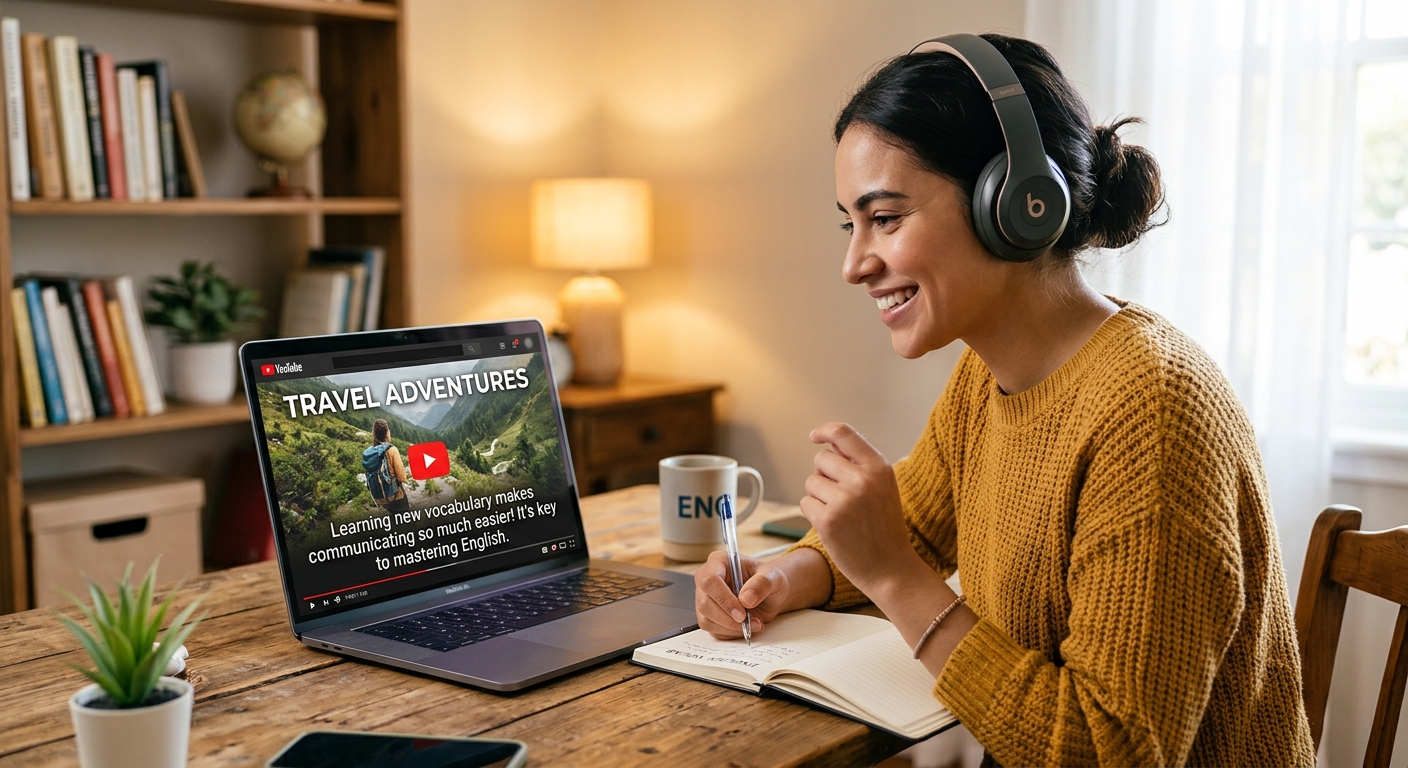
Your Listening Practice Loop: Choose a short video with clear speech and English captions. Listen once for the main message, then replay it with captions to check difficult sections. Keep a few useful phrases in a vocabulary notebook. Use another subtitle language briefly if a phrase remains confusing. Return to the English audio, practice hearing those phrases, and finish with captions off. Repeat the routine with manageable clips, giving familiar language time to become easier to hear.
Choose a Short Video You Can Work With
A manageable video makes repeated listening easier to fit into your day. Start with one to three minutes, or select a short section from a longer recording. A cooking demonstration, a personal story, or an explanation of a familiar hobby gives you a clear topic to follow.
Choose something you want to understand. Interest gives you a reason to replay a sentence. Familiar subject matter can also provide clues when a word escapes you. A learner who enjoys gardening may follow a planting demonstration more comfortably than an unfamiliar discussion about economics.
Before you begin, check that English captions are available and reasonably readable. Automatic captions can contain mistakes. Names, background noise, and overlapping voices may cause problems. If the text repeatedly looks strange or does not fit the audio, choose another clip.
The difficulty should leave room for progress. You need enough familiar language to follow the topic, plus a few places that require attention. If almost every sentence needs translating, save that video for another day.
Listen Once Before Reading the Captions
For your first viewing, leave captions off. Listen for the main message without trying to catch every word. Ask yourself what the speaker is doing, explaining, or describing. Notice the setting and any visual clues that help you follow the situation.
Afterward, write one sentence about what you understood. For example: “The speaker explains how she prepares lunch before work.” Add one uncertainty, perhaps a reason you missed or an instruction you could not follow.
This first attempt gives your later viewing a purpose. You have something specific to check. It also provides a starting record, making it easier to notice what changes after practice.
If a full minute feels overwhelming, begin with twenty or thirty seconds. Beginners can choose clips with one speaker and visible actions. More experienced learners can use interviews or explanations with fewer visual clues.
Use English Captions to Connect Sound and Meaning
Replay the same section with English captions. Check your first impression before stopping for vocabulary. Did you identify the topic correctly? Did you miss a negative word, a change of plan, or the speaker’s reason for doing something?
Then return to one difficult sentence. Read it, listen again, and notice where the written words become hard to separate in speech. A familiar phrase may sound unfamiliar because words run together. An unstressed word may be much less noticeable than you expected.
Take the sentence “I was going to call you.” You might recognize every word in print while struggling to hear the middle of the sentence. Replay that small section while following the caption. Then look away and listen again.
Avoid pausing after every unfamiliar word. Frequent stops can make the message hard to follow. Give attention to language that affects your understanding, appears repeatedly, or seems useful in your own conversations.
What Each Viewing Helps You Practice
| Viewing | Main Task | Useful Evidence |
|---|---|---|
| First listen without captions | Follow the topic and main message. | A brief account of what you understood. |
| Replay with English captions | Check meaning and connect words to sounds. | A corrected detail and a few useful phrases. |
| Focused sentence replay | Hear a previously confusing phrase. | Recognition of the phrase while looking away. |
| Final listen without captions | Follow the message through the audio. | A spoken recap and an accurate supporting detail. |
Keep Vocabulary Notes Small and Useful
Choose three to five items from the clip. These can be individual words, but phrases often give you more to work with. “Run out of milk” provides a situation and a pattern you can reuse. Writing only “run” leaves much of that information behind.
For each item, record the phrase, its meaning in this scene, and the video timestamp. Add a sentence about your own life. After hearing “put it off,” you might write, “I sometimes put off doing my homework until Sunday.”
Keep pronunciation notes simple. You could write “stress on OFF” or “hard to hear the middle word.” The purpose is to help you recognize the audio when you return. You do not need a detailed pronunciation system to begin noticing patterns.
Leave some unfamiliar words unrecorded. A notebook crowded with twenty new items can become difficult to review. A small selection gives you time to hear, say, and use each phrase.
Check Confusing Phrases in Another Language Briefly
Sometimes English captions show you the words without making the meaning clear. An idiom, cultural reference, or unfamiliar expression may still interrupt your understanding. At that point, a brief check in a language you know can help you resolve the uncertainty.
Consult multilingual subtitle guide for practical help accessing available subtitles in other languages. Check whether a useful language is available for your chosen video. Subtitle availability varies, and a translated line may not match the English wording closely.
Use the other language to answer one specific question. What does this expression mean here? Why did the speaker respond that way? Once the meaning is clear, return to the English caption and replay the original audio.
For example, “I’m running late” might cause confusion if you interpret “running” as physical movement. A translation can clarify the situation. Your next task is to hear the English phrase again and connect it with being behind schedule.
Keep this check brief. The routine still needs time for English listening. After resolving the phrase, close the translated subtitles and continue working with the original speech.
Replay Useful Phrases Before the Final Listen
Return to the sentences containing your selected vocabulary. Listen while reading, then listen while looking away. If you still cannot hear a phrase clearly, shorten the section to one sentence and try again.
Say the sentence aloud after the speaker. Aim for the rhythm and the words that carry the message. You do not have to copy every feature of the speaker’s accent. Focus on hearing where the phrase begins, which words receive stress, and how the sentence holds together.
You can also change one part of the sentence. After practicing “We ran out of time,” try “We ran out of coffee.” This gives you a chance to use the vocabulary beyond the exact example in the video.
Once the phrase becomes easier to hear, replay a longer section. Listen for it inside the speaker’s full message. A sentence practiced alone can feel different when it arrives between other sentences.
Finish With Captions Off and Check Your Understanding
Turn captions off for the final viewing. Let the section play without stopping. Follow the speaker’s message and notice whether the phrases you practiced now stand out.
After listening, give a short recap aloud. Include the main idea and one or two details. You might explain what happened, describe the speaker’s advice, or repeat the reason behind a decision. Check the captions afterward if a detail remains uncertain.
Compare this recap with your first note. Perhaps you now understand why the speaker changed plans. Perhaps a sentence that sounded blurred has become recognizable. Record that specific improvement.
A familiar clip cannot tell you everything about your listening ability. You have already studied its content. During a later session, try a new clip on a related topic and see whether you recognize any of the same phrases. That provides another useful check.
Make the Routine Work in an English Classroom
Teachers can use one short clip for a focused classroom activity. Begin with a simple listening purpose, perhaps identifying a problem or following a sequence of actions. Play the clip without captions, then give learners time to compare what they understood with a partner.
During the captioned replay, ask pairs to check one uncertain detail and select a useful expression. Keep the task narrow enough that students can discuss their choices. A class does not need to explain every line to learn from the recording.
Allow a brief language check where it helps resolve confusion. Then ask students to return to the English sentence and listen for the expression again. This keeps the activity connected to the spoken language.
For the final viewing, remove captions and give learners a clear response task. They could retell the event, explain an instruction, or state the speaker’s opinion with one supporting detail. Choose a task that matches the clip and the class level.
Beginners may benefit from a shorter section and sentence starters for their recap. Advanced learners can discuss tone, implied meaning, or how the speaker organizes an explanation. Everyone can follow the same basic routine while working toward a suitable goal.
Give Tomorrow’s Listening a Familiar Starting Point
Before choosing your next video, spend a minute reviewing yesterday’s phrases. Cover the meanings and try to recall them. Say your personal example sentences, then replay a short section if you need a reminder of the sound.
Build a schedule that feels manageable. A few focused sessions each week can give you room to revisit language without turning every video into homework. Keep some viewing purely for enjoyment, too.
Your next practice session needs only a short clip, a few useful notes, and a final listen with the captions off. Over time, look for concrete changes: a phrase you hear immediately, a detail you catch on the first attempt, or a sentence you can use in conversation. Those moments give you a clear reason to keep listening.